Commitment Predictability™

Every Transformation Looks Infinite Until Someone Deconstructs It.

I Deconstruct Transformation into Execution, Execution into Exposure, and Exposure into Commitments that hold.

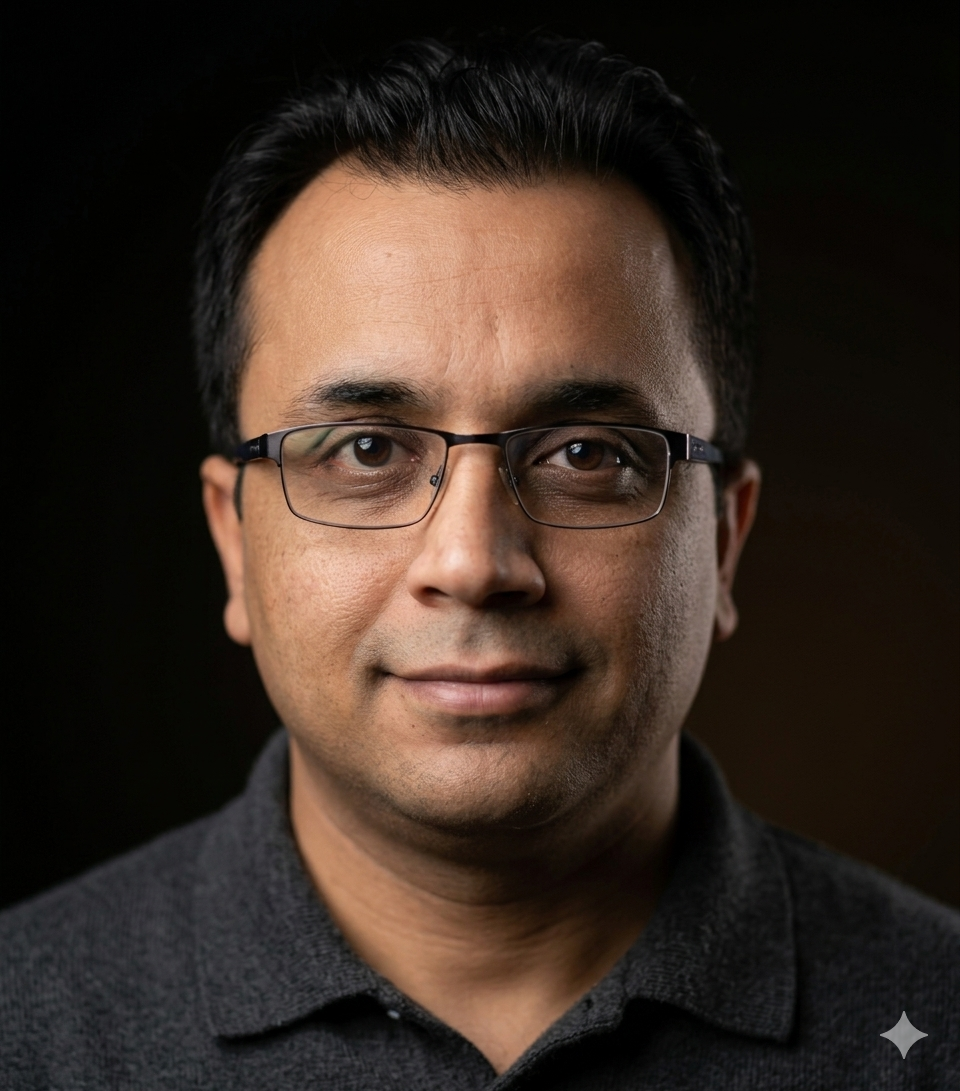
Varun Bhatia

Transformation Diagnosis. Execution Architecture.

Associate Director, Operations Management, Scitara Corporation

I deconstruct transformation into something executable, for organizations, and soon, for you.

Read the case studies
Varun Bhatia, Associate Director of Operations Management

18 years, 5 companies, 1 Pattern.

ScitaraErgomed-PrimeVigilanceSyneos HealthinVentiv HealthSciformix

Every Transformation Looks Infinite Until Someone Deconstructs It.

Most execution advice fails at the moment it's needed most, because it's built for conditions that rarely exist: clean data, aligned stakeholders, a mandate everyone has already agreed to. Real transformation almost never starts that way. It starts in ambiguity: competing priorities across a global organization, incomplete information, and a narrow window to build enough conviction to move.

I don't think transformation is mysterious. I believe it is just uncomposed. Every program that looks impossible: a customer relationship under strain, a product an investor is betting on, an operation that doesn't exist yet, is really just a set of finite, deconstructable problems wearing an infinite costume. My job in every role I've had for eighteen years, managing transformations, has been to diagnose, deconstruct, apply a pattern, and execute for success.

A few things I've come to believe, the hard way:

Certainty isn't found. It's built, one deconstructed piece at a time.

Being proactive isn't a personality trait. It's a discipline I apply to the work itself, seeking out the transformations nobody else wants to own, before they become crises.

The pattern outlasts the industry. The same diagnostic instinct has held across pharmacovigilance, product leadership, and lab technology: domains with nothing in common except the shape of the problem.

Speed isn't diagnosis. Reacting quickly to a symptom isn't the same as naming what's actually driving it, and that distinction is the difference between solving a problem once and solving the pattern behind it permanently.

This isn't a record of what I've done. It's the operating system I bring to whatever transformation comes next, for the organizations and the people I work alongside.

If this is how you think about execution too, there's a WhatsApp community where it gets discussed in real time. Coming soon.

Seven-figure, multi-year expansion across dozens of global sites

A small founding team scaled into a global capability spanning hundreds of people

Zero-incident go-lives across multi-site global rollouts

A large-scale, multi-country transition delivered across language and regulatory boundaries

Case Studies

The Multi-Vendor Enterprise Rescue

The Assumption

Everyone treated this as a technology integration problem: get the vendors coordinated and build the integration.

What it was

One of the most complex multi-vendor transformations in the portfolio: an integration platform provider, a systems integrator, the customer's own global business and IT functions, and multiple specialized vendors, all operating without a shared model of what success looked like or who owned what.

What I did

Built the governance and decision architecture from zero, but the real work was earning the trust to make it stick. I translated competing priorities across every stakeholder group into a single decision framework, then orchestrated the alignment needed for a genuinely global organization to move on it together, not just comply with it.

What this proved

What had been the hardest, least-trusted program in the portfolio became the model the customer adopted for how complex transformation should be orchestrated across their enterprise, and the confidence to expand into a seven-figure, multi-year commitment across dozens of additional global sites.

The Flagship Product Upgrade

The Assumption

This read as a product engineering exercise: plug in a vendor's AI capability, ship a release.

What it was

A confidence problem playing out on an investor's timeline. A significant capital decision hinged on proof that the flagship product could evolve fast enough to justify it, with no slack in the schedule.

What I did

Brought in directly by executive leadership, I owned the entire upgrade lifecycle: vendor governance, cross-functional alignment across product, quality, and validation, and a rollout sequence built to demonstrate value to leadership in stages, not just at the finish line.

What this proved

When the real deliverable is confidence, not code, execution has to be visible at every stage. Two releases and a phased rollout later, that confidence translated into freed capacity the business could redeploy where it mattered most.

Building a Capability From Zero

The Assumption

A regulatory finding meant this was a compliance exercise: write the SOPs, close the audit, move on.

What it was

A capability that didn't exist anywhere in the client's organization: not a checklist item, but an entirely new function that had to be imagined into existence, with no playbook, no precedent, and no one at the company who had done this before.

What I did

I was in the room for the first conversation where that gap became undeniable, before there was a team, a process, or even a name for what needed to be built. I wrote the governing document that started it, then spent several years building the structure underneath: training, escalation pathways, quality systems, and eventually a leadership bench that could run it without me. A small founding team became a global capability spanning hundreds of people, across regions and regulatory classes nobody had planned for at the outset.

What this proved

Some transformations don't have an existing model to diagnose against: the diagnosis is deciding what needs to exist in the first place. Of every program I've led, this is the one I'd still tell the same way twenty-five years from now: proof that decomposing “nothing exists yet” into something that scales for a decade is the hardest, and most durable, version of the work.

The Change Management Behind an Enterprise System

The Assumption

This looked like a platform rollout: build the software, deploy it, move to the next account.

What it was

A trust and adoption challenge inside an organization of hundreds, spread globally, that had built years of operational muscle memory around manual, disconnected tools. The technology was never the constraint. Belief was.

What I did

As part of a small founding team, I owned the side of this problem no product roadmap could solve, converting an organization's confidence in “the way we've always worked” into confidence in something new, while my colleagues built the platform underneath it. That meant orchestrating adoption across the full account and making the new way of working feel inevitable, not imposed.

What this proved

Enterprise transformation rarely fails on technology. It fails on trust. This capability became the foundation the customer relationship later scaled on, enabling more scope and more complexity than the manual model ever could have supported.

The Transition Management Capability Built From Scratch

The Assumption

The client wanted a transition: move a body of work from one vendor to another without disruption.

What it was

The client wasn't buying a transition. They were buying proof that a repeatable capability existed: evidence the organization could take on complexity it had never demonstrated before, and be trusted with more of it.

What I did

Hired with an explicit three-year mandate, I built that capability from nothing, starting as a manual, prototype-stage framework and evolving it toward a scalable operating model the enterprise could reuse. I then used it to lead a large-scale, multi-country transition spanning language and regulatory requirements the organization had never supported before, managing the stakeholder complexity that came with it.

What this proved

Winning new scope rarely comes down to the transition itself; it comes down to whether the client believes you've built something repeatable. That capability became exactly the kind of proof clients bet expansion on.

Published Work

Whitepaper

The 3-Lane Delivery Framework

Written from the same discipline behind the work above, now the operating model behind Scitara's Expansion capability.

Read the whitepaper

Execution. Deconstructed.™, part of Transformation. Deconstructed.™

Execution. Deconstructed.™: The Course, Coming Soon.

Everything above is what I've executed. This is what I'm building so you don't have to learn it the way I did.

Execution. Deconstructed.™

It's 4:47 on a Thursday, and there's a version of your status report that's true, and a version that's safe.

Nothing has technically gone wrong. But there's a piece of the program you can't fully defend, and typing green buys you one more week to find out what you're actually looking at.

That moment isn't dishonesty. It's a choice between two different horizons: protecting this week, or being trusted for years. Almost everything that goes wrong in a program traces back to picking the first without realizing it.

Here's the belief underneath the course: every program has a needle measuring how much of it is actually known versus how much is still fog mistaken for agreement. Most start around 25% known. Most people treat that number like weather. It isn't. It's something you move on purpose, every week, and moving it always costs the same currency: saying the uncomfortable true thing earlier than instinct allows.

Execution. Deconstructed.™ is built to make that choice visible while it's still happening, before the room makes it for you.

Eighteen years of learning this the hard way. This is the shortcut I didn't have.

Where to go from here

The Case Studies

See the pattern in five real programs.

LinkedIn

Follow the thinking as it develops.

Book A Call →

For roles, advisory work, or speaking.

Email

For anything that doesn't fit the above.

Newsletter

Long-form thinking, split across Transformation. Deconstructed.™ and Execution. Deconstructed.™

YouTube

Coming Soon

Video breakdowns of the pattern, as the channel comes online.

WhatsApp Community

Coming Soon

Where the thinking gets discussed in real time, not just read.